Watchmaking authority
How to care for an automatic watch so it lasts for generations
, 7 min read
An automatic watch is not an object to be used and replaced. Treated well, it can accompany someone for a lifetime and then pass to the next generation. Knowing how to care for an automatic watch requires no watchmaking expertise: it is enough to understand how it works and adopt a few habits that, over the years, make all the difference.
In this article we look at those habits: how to wear and wind it, how to protect it from water, magnetism and knocks, how to clean and store it, and when a service is advisable.
Understanding what you wear on your wrist
An automatic watch is wound by the movement of the arm. An oscillating weight turns with every gesture and tensions the mainspring, which stores the energy and releases it little by little. If you would like to review how to assess a calibre before choosing one, we explain it in our guide on how to choose an automatic watch.
Two useful ideas follow from this mechanism. First: if you leave the watch still for longer than its power reserve allows, it will stop. This is normal and does it no harm. Second: a mechanical watch has a small daily variation in accuracy, which depends on the position in which it rests, the temperature and how it is worn. A watch regulated by hand, one by one, reduces that variation, but does not turn it into that of a quartz watch.
How to care for an automatic watch day to day
Wear it and, if it stops, wind it calmly
The best way to keep an automatic watch running is to wear it. If it has stopped, most automatic calibres can be wound by hand: with the crown in its initial position, turn it gently clockwise a number of times until the balance starts, then set the time. There is no need to force it.
Watch winders are an option for those who alternate between several watches, but they are not essential. A watch stopping and being set again does it no harm.
The crown, always in place
The crown is the door to the watch. Before any contact with water, check that it is closed in its position. Avoid operating it when the watch is wet or under water. If your watch has a date, it is wise not to change it in the hours around midnight, when the calendar mechanism may be in the middle of its change; the manual for each model indicates the exact window.
Water: water resistance is not for ever
A 10 ATM watch is designed for bathing and swimming. Even so, water resistance depends on gaskets that age with time, sun, salt and chlorine. Three habits help preserve it:
- Rinse with fresh water after the sea or the pool, and dry with a soft cloth.
- Avoid sudden changes in temperature, such as a sauna or a very hot shower straight after cold water.
- Have the water resistance checked whenever the watch is serviced, especially if it is often worn at sea.
If condensation ever appears under the crystal, do not wait: it is time to have it checked. If you sail often, in our article on the nautical watch we explain what to ask of a watch that lives by the sea.
Magnetism: the invisible enemy
Speakers, tablets, bag clasps and magnetic cases generate magnetic fields that can affect the balance spring. The typical symptom is clear: the watch suddenly starts to gain time noticeably from one day to the next. The international standard ISO 764 states that, to be called antimagnetic, a watch must resist a field of 4,800 A/m, but it is best not to leave any mechanical watch resting on these objects. If you notice this change, the solution is usually simple: demagnetisation at a service centre.
Knocks and vibrations
A quality calibre incorporates shock protection, but it is not designed for the repeated impact of a golf club or a racket. For those moments, it is better to leave the watch in its case.
Cleaning: little and gently
Sapphire crystal is very difficult to scratch and is cleaned with a microfibre cloth. For the steel case and bracelet, a slightly damp cloth is usually enough. If dirt builds up between the links, with the crown closed and on a water-resistant watch, you can use a soft-bristled brush with lukewarm water and a drop of neutral soap; then rinse and dry carefully.
Avoid solvents, abrasive products and household ultrasonic cleaners. Gold-tone and polished surfaces always appreciate the gentlest treatment.
Storing it well is also caring for it
When you are not wearing it, keep the watch in its case or in a dry place, away from direct heat and humidity. If you own several watches, keep them apart so they do not rub against one another. And keep the case, the documentation and the certificate: they are part of the story of the piece and accompany the watch if one day it changes hands.
The periodic service: the secret of longevity
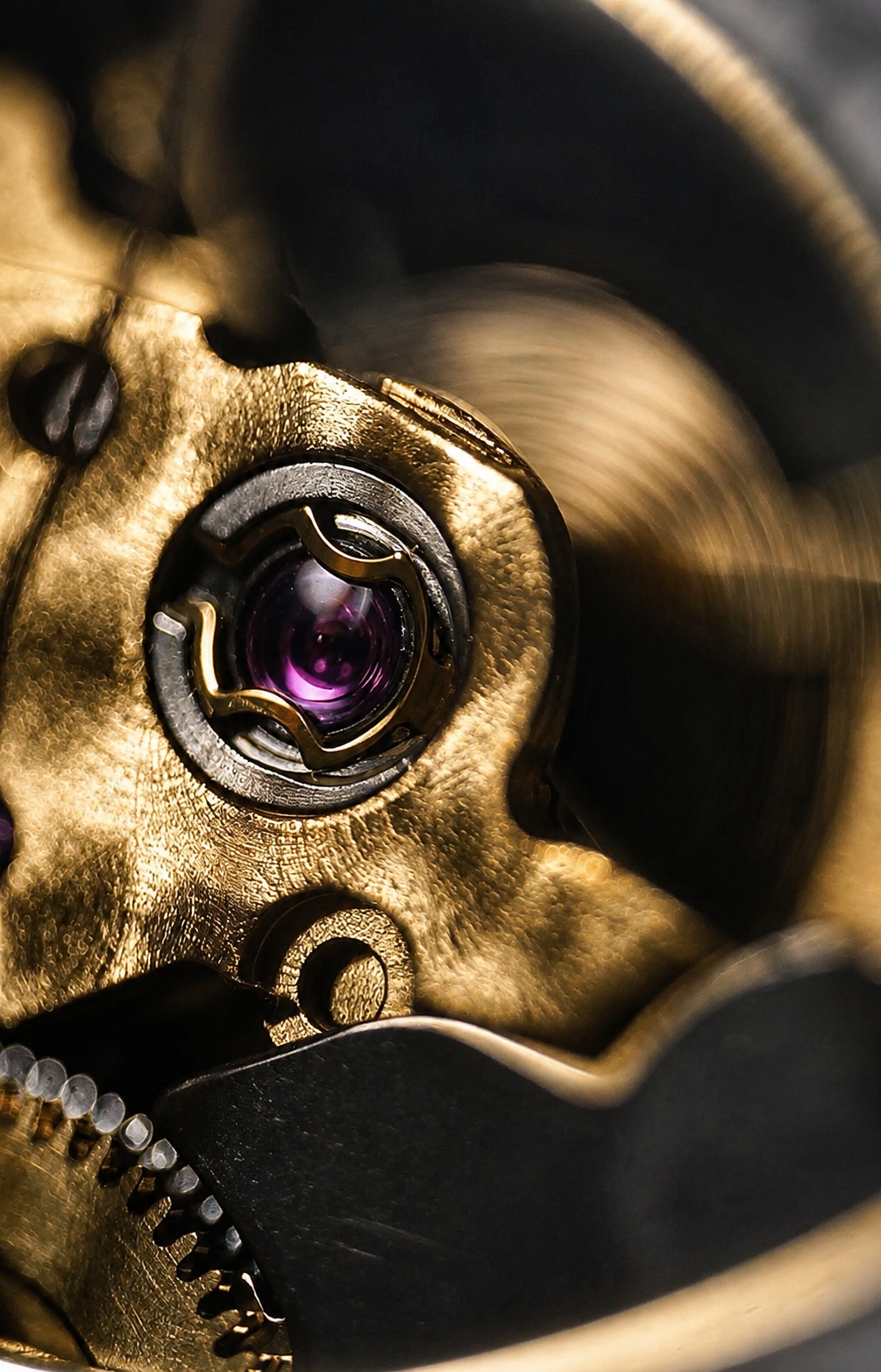
Inside a calibre, dozens of parts move without rest, lubricated with very fine oils that lose their properties over the years. That is why an automatic watch needs a full service from time to time. Many manufacturers recommend one every few years, depending on use and model. During a service the calibre is taken apart, cleaned, lubricated and regulated, and the water resistance is checked.
Some signs suggest bringing it forward:
- The watch steadily loses accuracy.
- The power reserve seems shorter than usual.
- The crown feels rough or there is an unusual noise when the watch is turned.
- Moisture appears under the crystal.
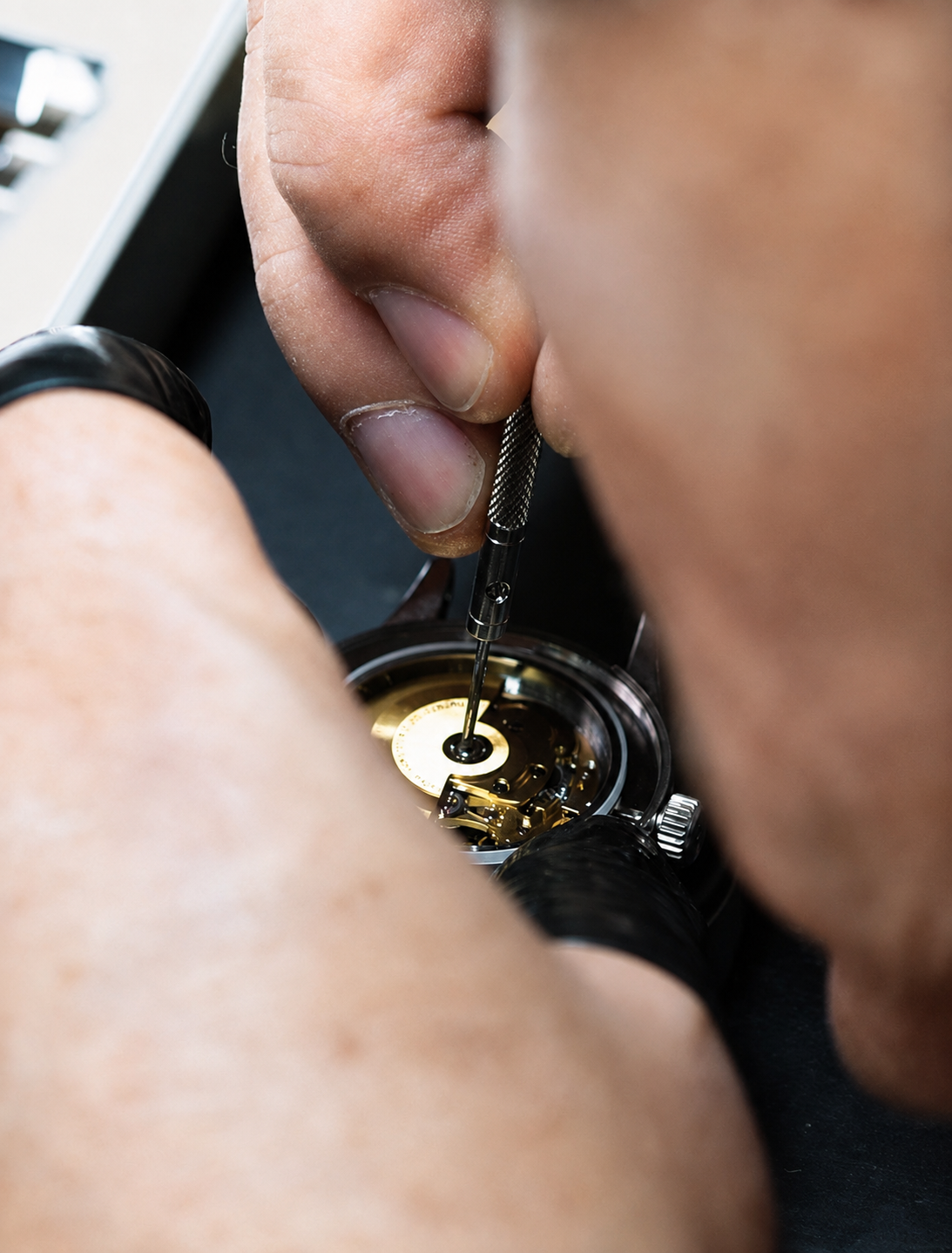
Always entrust the watch to a service centre that knows the model. Opening the case without the right tools can compromise its water resistance and finish.
Caring for a Ferreras
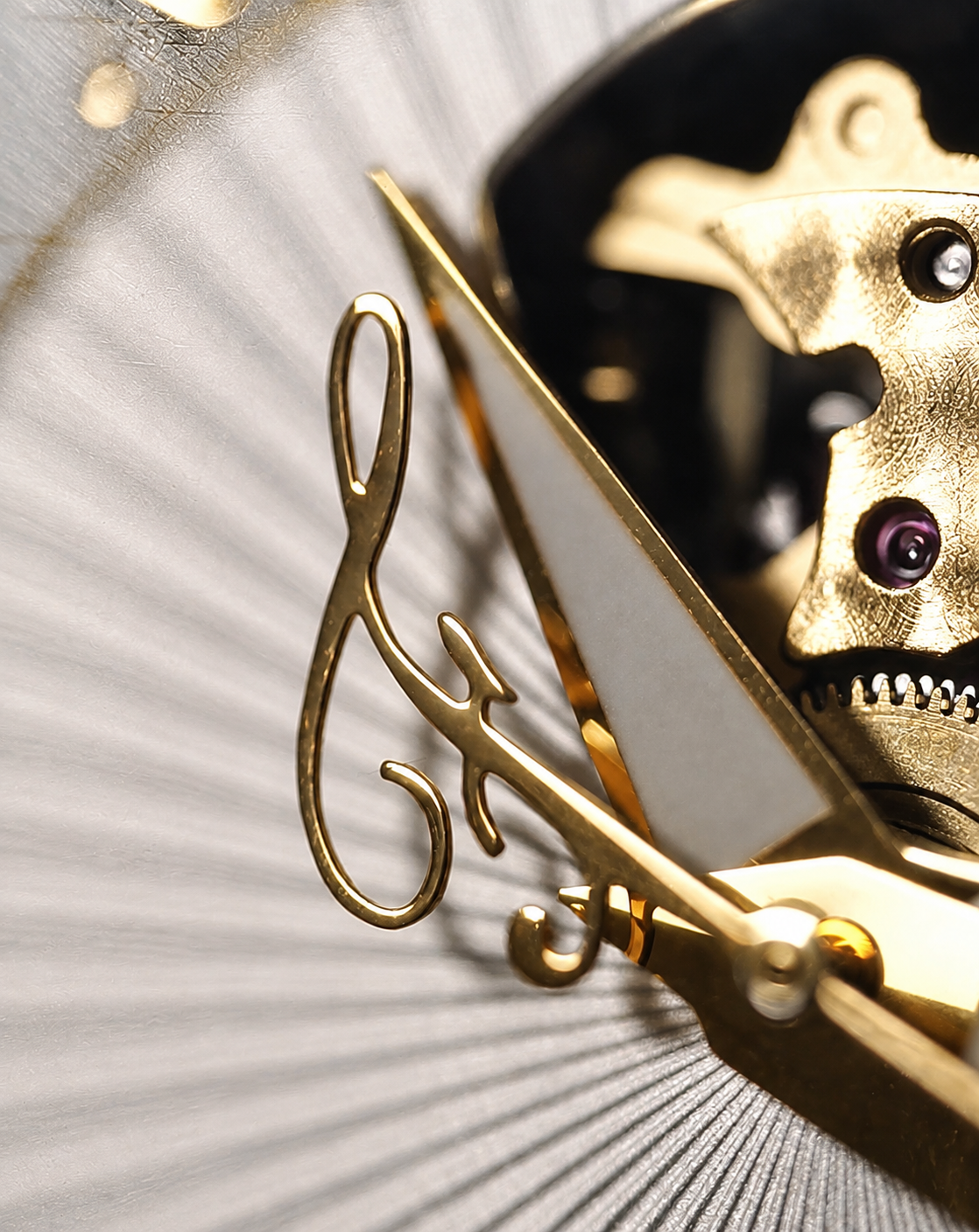
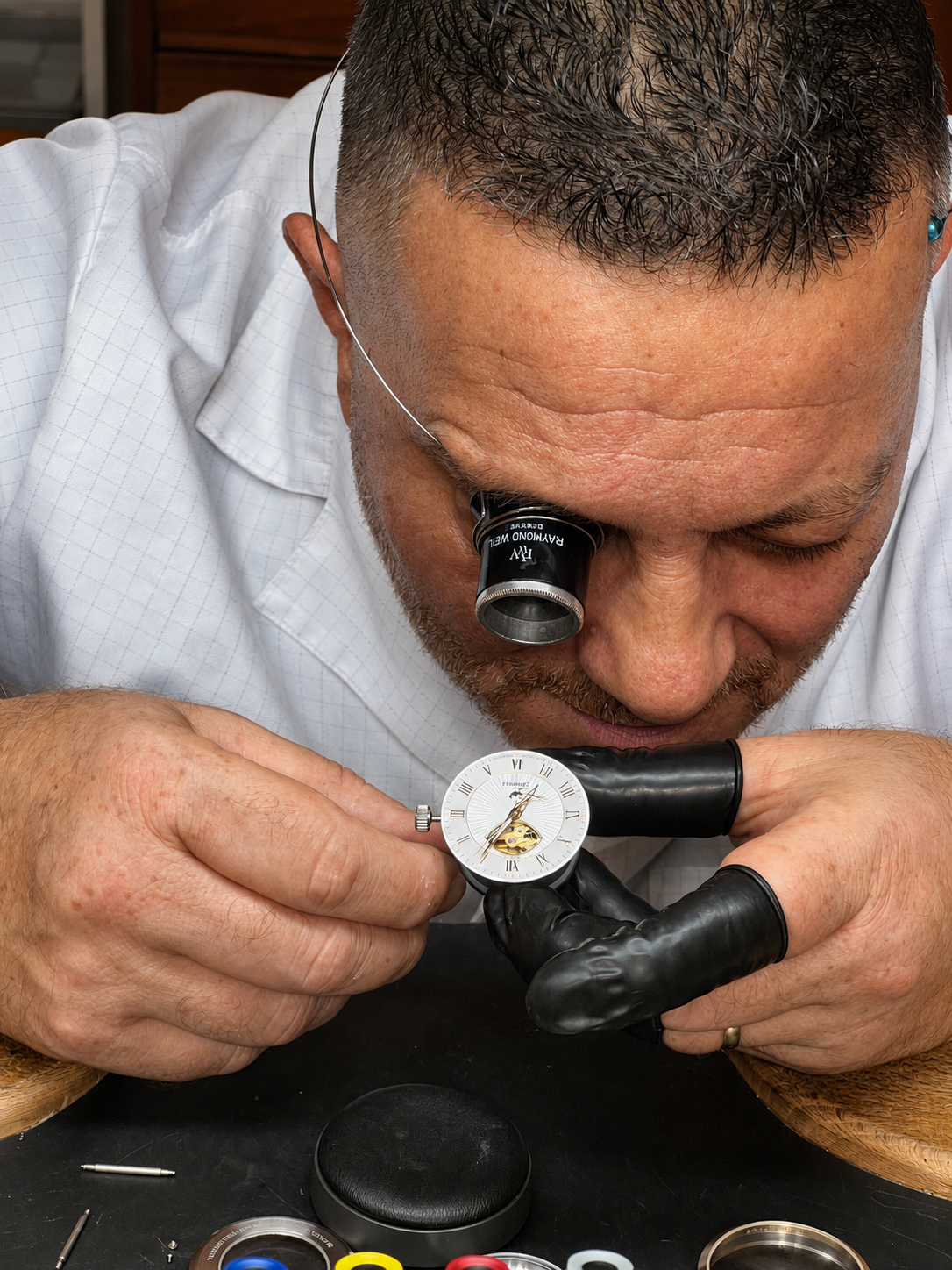
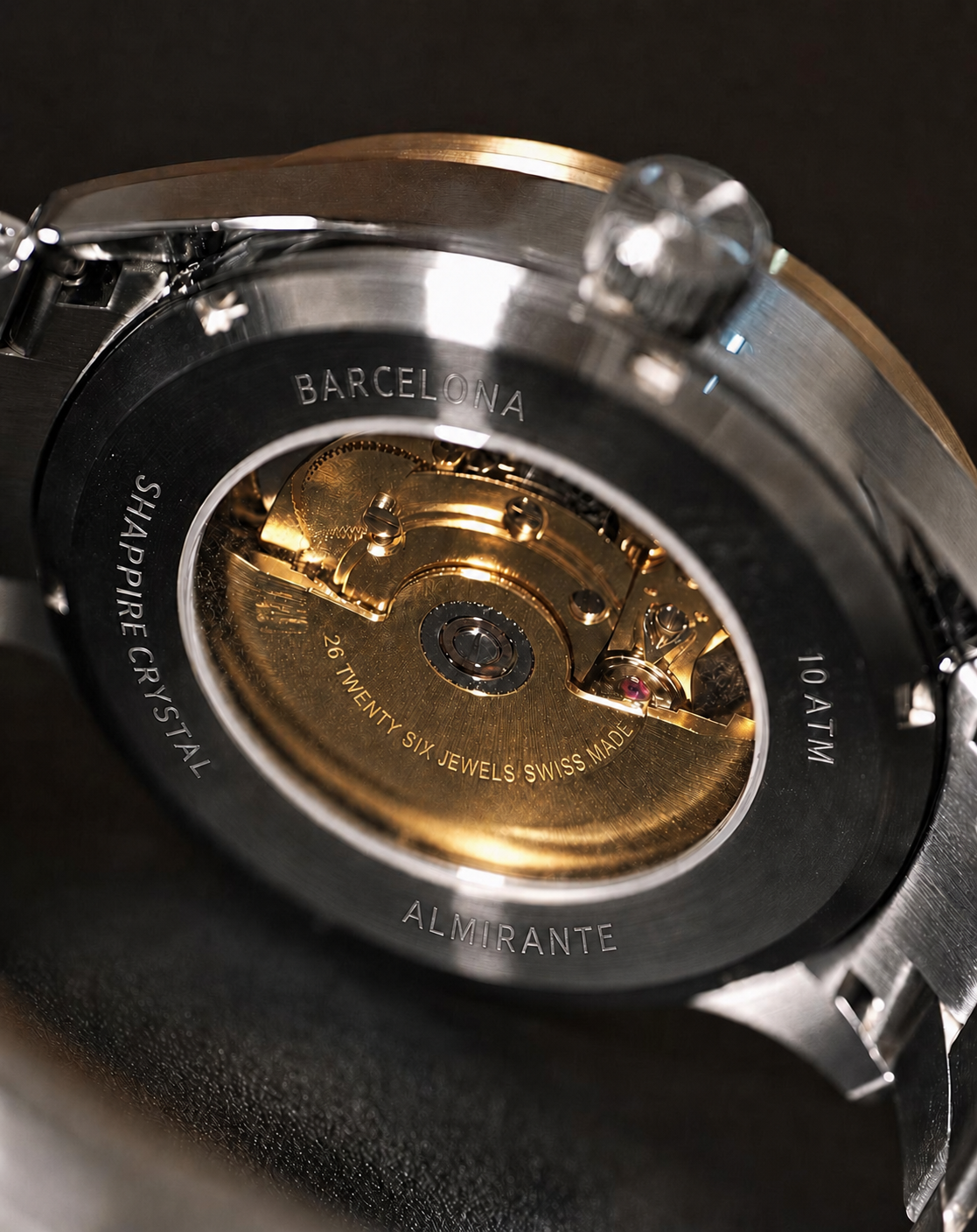
Every Ferreras Almirante incorporates a Swiss automatic semi-skeleton calibre with a gold-tone finish, 26 jewels and an approximate power reserve of 38 hours, regulated by hand, one by one, by a master watchmaker in Barcelona. In A watch made by hand in Barcelona we describe that work, gesture by gesture.
The 40 mm 316L steel case, the sapphire crystal and caseback and its 10 ATM water resistance are designed for everyday wear, in the city or at sea. The bezel, with 18 kt gold plating and nano-ceramic protection, bears on its inside the number of each of the 100 pieces.
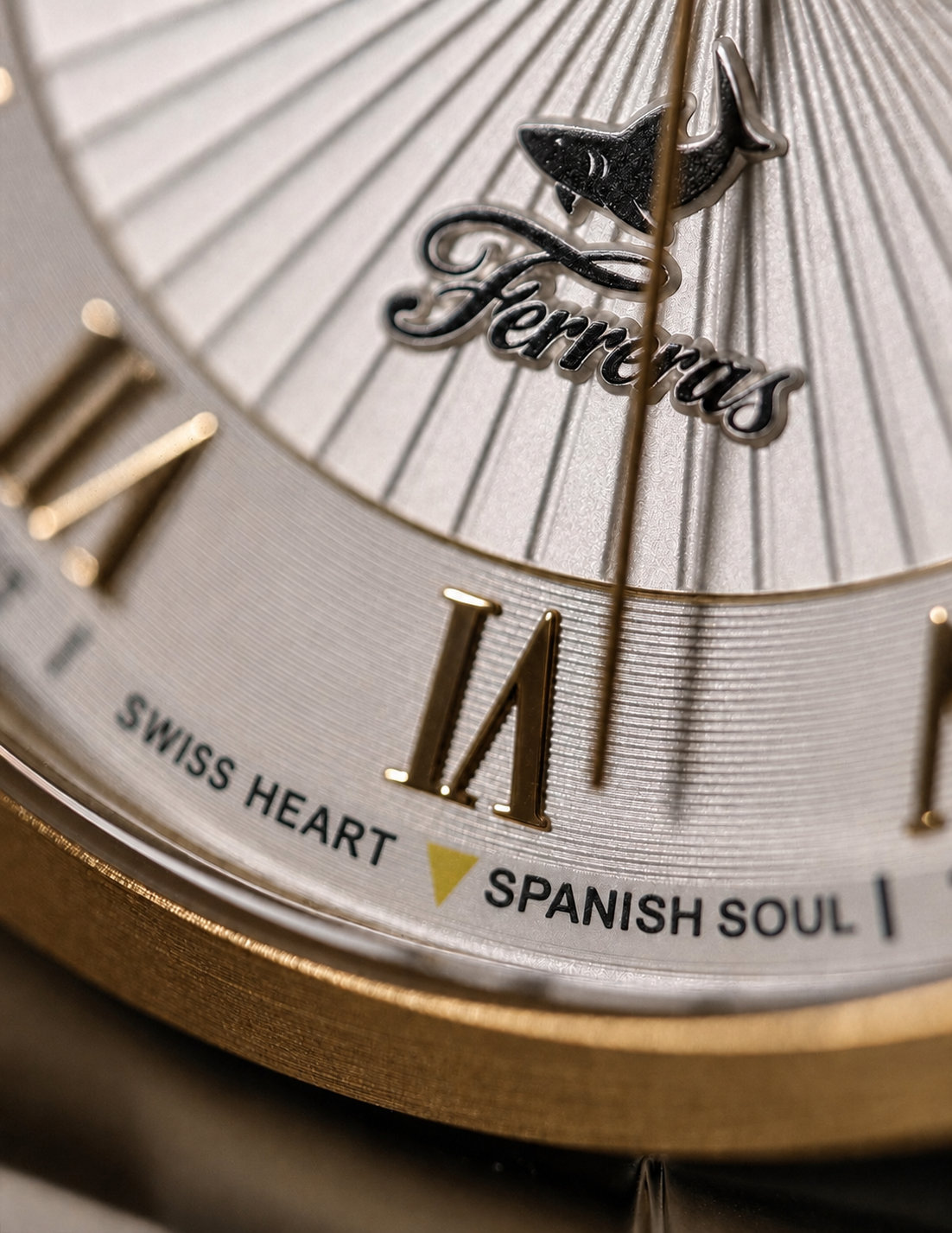
After-sales care is offered directly by Ferreras, with an official service centre in Barcelona. For repairs under warranty, we take care of shipping, including internationally. Swiss Heart, Spanish Soul: a Swiss heart that deserves to last, and a soul that goes with it. You can discover this way of understanding time on the brand page.
See it up close
A watch is better understood in the hand. If you would like to see the Almirante and ask any question about its care, we will arrange a private presentation, in person anywhere in Catalonia or by video call if you are abroad.
Frequently asked questions
What happens if I do not wear my automatic watch for a few days?
It will stop when its power reserve runs out. This is normal and does it no harm: simply give it a few turns of the crown and set the time.
How often should an automatic watch be serviced?
Many manufacturers recommend a full service every few years, depending on use. It is worth bringing it forward if the watch loses accuracy, its power reserve shortens or moisture appears under the crystal.
Can I swim with an automatic watch?
If its water resistance allows it, as with a 10 ATM watch, yes. Check that the crown is closed, do not operate it under water and rinse the watch with fresh water after the sea.
Why has my automatic watch suddenly started gaining time?
The most common cause is magnetism, from nearby speakers, tablets or magnetic clasps. A service centre can demagnetise it quickly.